понедельник, 10 октября 2016 г.


"Книга і читання - важливий чинник у вихованні духовних цінностей учнів"

Чтение представляет собой одно из важнейших средств получения информации и в жизни современного образованного человека занимает значительное место, а также представляет собой форму письменного общения, которое обеспечивает передачу опыта, накопленного человечеством в различных жизненных сферах, то есть оно обучает, развивает и воспитывает. В реальной жизни чтение выступает как отдельный, самостоятельный вид коммуникативной деятельности, которая служит средством передачи информации, заключенной в тексте.                        Изучение иностранного языка способствует развитию познавательных функций психики человека. В процессе овладения иностранным языком тренируются различные приемы запоминания, формируется филологическое мышление, расширяются знания об окружающей действительности. Именно чтение помогает развить все эти умения.


Перед тем, как начинать читать книги на языке, определитесь на каком уровне владения английским вы сейчас.
Узнать свой уровень важно потому что все книги (исключая детские), написанные изначально на английском, соответствуют уровню upper-intermediate, advanced.  Это значит, что на англоязычных сайтах вы не найдете книг для уровня beginner или pre-intermediate. Как быть?
Для начинающих учить английский есть адаптированные книги, то есть переработанные русскоязычными людьми. Многие сложные структуры, выражения заменяются в процессе адаптации на более простые. Маленьким ученикам вообще ничего не адаптируют обычно — просто переводят короткие рассказы на очень простой английский.
Найти подходящие вам по уровню книги можно в сети где угодно. В основном, это книги детские, но на них проще, так скажем, «набить руку».
Все книжки сопровождаются заданиями на отработку различных аспектов языка. К некоторым книгам прилагаются аудио-дорожки.
Учите  английский читая.
Список
адаптированных книг:
Elementary:
D. Defoe Robinson Crusoe  (+audio) 
A.Hutchinson Home for Christmas
R.MacAndrew Bad Company
H.Melville Moby Dick (+audio) 
T.Vicary The Elephant Man
Pre-Int:
F. Burnett The Secret Garden 
J.K. Jerome  Three men in a boat
R.Kipling Kim
Philip Prowse  L. A. Winners
Intermediate:
Christie A. Death in the Clouds 
Conan Doyle A. The Sign of Four 
J. Conrad Heart of Darkness 
A. Maley He Knows too Much 
Marshall A.  Australian Stories
Philip Prowse Bristol Murder
Steinbeck J.  The Red Pony
Trease G.  Missing from Home
Upper-Int:
Austin J. Emma
Chisholm RMeet Me in Istanbul
Christie A. A Murder Is Announced
Ian Fleming Doctor No
Ian Fleming Gold Finger

понедельник, 29 февраля 2016 г.

Перегляд фільма " Подорож Лондоном" учнями 7-В класу.
Шановні школярі.

З 29 лютого по 5 березня в нашій школі проходитиме тиждень англійської мови. 

Сподіваюсь, що ви приймете активну участь у цьому заході.


четверг, 4 февраля 2016 г.

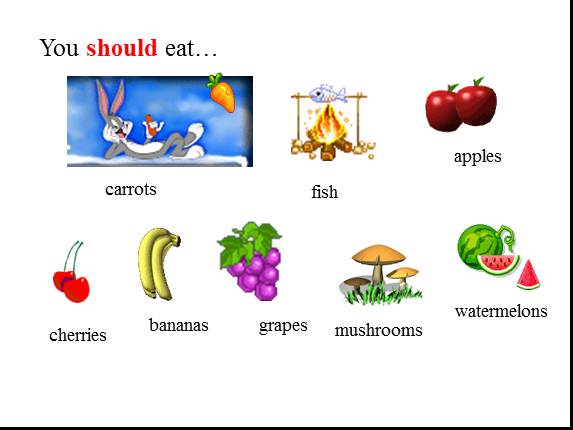
Материалы для повторения для учеников 3-х классов. Кроссворд по теме еда


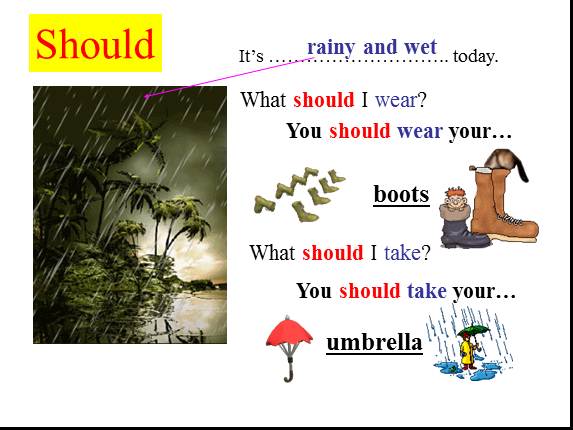
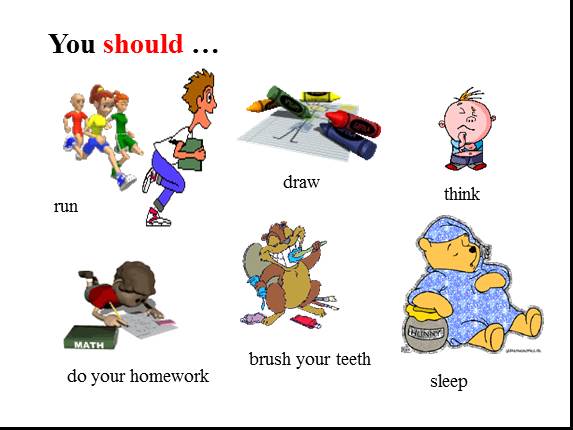
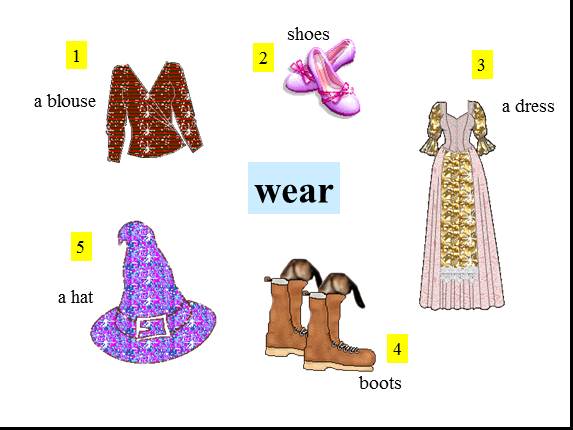
Материалы для повторения. Модальный глагол SHOULD

 Модальный глагол Should
Модальный глагол Should
Материал для повторения для учащихся 5-х классов. 
  How to speak about future?
 The Future Indefinite Tense (Future Simple) -
lдля выражения однократного или повторяющегося действия в будущем
lshall / will + V
 Signal words
ltomorrow
lthe day after tomorrow
lnext Monday
lin a few days 
Translate these sentences into English.
 
lНа следующей неделе они уедут (leave for) в Лондон.
lОн не будет слушать (listen to) оперу.
lЗавтра мои родители прибудут в Нью-Йорк.
lКуда они поедут следующим летом?
lУ кого будет вечеринка через два дня?
 Be going to… - для описания запланированного действия, для выражения намерения говорящего.
 
lAm / is / are + going to + V
lWho is going to do what?
lI/play/the piano.
lMary/go/to the cinema.
lTim/visit/Trafalgar Square
lThey/have/a birthday party.
lWe/move/to a new cottage.
 The present Continuous tense - для описания запланированного действия, которое произойдёт в ближайшем будущем.
 
lam / is /are + V ing
lExpress the same idea in another way.
lThe plane is going to arrive half an hour later.
lMy friends are going to come to Moscow for the weekend.
lMy grandparents are going to move into a new flat next week.
lWhen are they going to arrive? 
 Use Future Indefinite, Present Continuous or “to be going to”
 
1.She (be) nine next month.
2.I think I (go) to the country tomorrow.
3.What you (buy) in this shop? I haven’t decided yet I probably (buy) some apples.
4.She (arrive) next Sunday.
5.We (move) into a new house next month.

среда, 3 февраля 2016 г.


9 февраля отмечается Международный день безопасного интернета. 


 10 rules for Internet use

 If children are to use the Internet unsupervised, an agreement or set of rules should be made in dialogue with the children.

An open dialogue with children regarding Internet rules makes it easier for children to understand and agree with the rules. It is also more likely that children will follow the rules when they have participated in making them.
10 useful things to make an agreement on:

  • Parents should keep themselves oriented on their children’s use of Internet. Children should share their experiences online with their parents.
  • An agreement should be made on how much time children are allowed to spend online every day, which websites they are allowed to visit and which activities they can do there.
  • Children should trust their “gut feeling”. If something they see, read or experience online makes them feel nervous or uncomfortable, they ought to share these feelings.
  • When children participate in an online activity where a log on name or user name is required, parents should help them come up with a suitable name and make sure it doesn’t reveal any personal information.
  • Inform children never to reveal their address, phone number or any other personal information, such as which school they attend, where they like to play and so on.
  • Rules for good behaviour and the difference between right and wrong is the same online as in normal life.
  • We all have to respect other people’s property online. Illegal copying of music, games, movies, software and so forth is theft in the same way as stealing something in a store.
  • Children must never agree to meet friends they have met online in person. Such friends are not always who they seem to be!
  • Children need to know that not everything they read or see on the Internet is true. If uncertain, they ought to ask an adult.
  • Children’s activities online can be controlled using advanced software. These are not used by adults because they mistrust children, but in order to make it safer to use the Internet. Different safety settings help blocking inappropriate content, monitoring what websites children visit and keeping track of their online activities.
Source:
Microsoft

Useful links:
Microsoft Online Safety
http://www.microsoft.com/protect/

Microsoft Security
http://www.microsoft.com/security/